
Municipal OT security guidance
Minnesota water-system cyberattacks reinforce the need for VPN-only remote access
Remote communications are essential to modern water and wastewater operations. When traffic crosses infrastructure the municipality does not control, the connection must protect itself.

A warning for every municipal utility
A coordinated cyberattack targeted operational technology at more than 30 Minnesota community water systems on July 26 and 27, 2026. State incident-response teams worked with federal, state, local, Tribal, and private-sector partners. Officials reported limited or mitigated effects in communities that disclosed incidents, with no active request for residents to change normal drinking-water use.
Plymouth reported communication outages affecting two water towers and multiple wastewater lift stations while crews continued through manual procedures. The city also said the issue was limited to equipment connected through cellular communications.
That detail does not establish that a cellular carrier was compromised or that cellular technology caused the attack. The initial access method, affected equipment, account, vulnerability, and responsible organization had not been publicly identified.
The BEA standard
Cellular service is transport, not a security boundary
Cellular communications can be reliable and secure for towers, wells, lift stations, pump stations, and other remote facilities. But a modem does not automatically protect the PLC behind it. A private IP address is not encryption, a private carrier network is not a firewall, and a private access-point name does not eliminate the need for authentication and access restrictions.
Protect the path
Use a maintained VPN with strong encryption and authenticated endpoints whenever OT traffic crosses a cellular carrier, internet provider, leased circuit, cloud service, or other external network.
Protect the destination
Terminate the connection at a firewall or secure gateway and permit only the required source, destination, protocol, port, user, device, site, purpose, and access period.
Protect the account
Use individual accounts, strong authentication, multifactor authentication where practical, connection logging, controlled account lifecycle management, and prompt removal of obsolete access.
Protect operations
Segment control and business networks, maintain current firmware and security updates, document the architecture, and preserve tested manual operating procedures.
Treat third-party networks as untrusted
“Untrusted” does not mean the service provider is acting improperly. It means the utility does not control every router, support account, platform, configuration, subcontractor, maintenance process, or security decision along the route. Design as though the path between trusted endpoints could be observed, scanned, interrupted, or misconfigured.
Examples
- Cellular and public internet connections
- Cable, fiber, or DSL internet services
- Third-party leased circuits
- Shared municipal or county networks
- Cloud-managed or vendor remote-access platforms
- Third-party-owned or unmanaged radio networks
Utility-owned radio is different
A properly designed municipal radio network may remain a trusted internal system when the utility owns, programs, maintains, and controls its radios, frequencies, addressing, sites, and permitted participants. It still requires review, segmentation, documentation, and least-privilege access.
Remote viewing is remote access
An operator checking SCADA from home, an engineer troubleshooting a pump, an integrator reviewing PLC logic, and a technician examining an HMI or VFD all represent remote access to critical infrastructure.
Authorized computer → encrypted VPN → municipal firewall → specifically approved internal system
Do not directly expose PLC programming interfaces, HMI web servers, SCADA servers, Remote Desktop, VNC, industrial-router administration, engineering software services, camera interfaces, building controls, or unprotected equipment web interfaces to the public internet.
Site-to-site traffic needs the same protection
A tower reporting to a plant, a lift station sending alarms to SCADA, or a well station exchanging pressure and pump data is also remote access when the path crosses an external network.
Remote PLC network → remote-site firewall → encrypted VPN → central-site firewall → SCADA network
The PLC and HMI remain on a private local network. Authenticated firewalls establish the encrypted tunnel and permit only the specific process traffic required. The provider transports the tunnel; it does not become part of the trusted control system.
Encryption and firewalling perform different jobs
Encryption protects the path
It helps prevent operational data and credentials from being observed or altered while traffic crosses infrastructure outside the utility's control.
The firewall protects the destination
It prevents an encrypted tunnel from becoming a broad bridge into the control network by limiting exactly what the connection may reach.
Federal standards follow the same security principle
Federal agencies routinely send information across commercial internet providers, telecommunications carriers, cloud platforms, and other infrastructure they do not fully own or control. Federal security policy does not treat those third-party networks as the protection boundary. Sensitive traffic must instead be protected using approved cryptography and secure communications methods.
Validated cryptography
FIPS 140-3 establishes security requirements for cryptographic modules operated by federal agencies or on their behalf. The NIST validation program verifies that modules meet the standard.
Protected communications
NIST guidance identifies TLS for protecting approved application and web traffic across the internet. NIST also describes IPsec VPNs as a means to provide confidentiality, integrity, authentication, replay protection, and access control for network-to-network traffic.
Trust-boundary controls
CISA's Trusted Internet Connections guidance reinforces that protections must remain in place when federal systems connect with remote users, cloud services, and external networks. It does not require one technology for every connection, but an outside carrier or cloud provider should not automatically become part of the trusted network.
Field checks for municipal teams
Inventory access
- Who can connect remotely today?
- Which systems can each person reach?
- Are accounts individual and current?
- Can access be disabled immediately?
Review boundaries
- Does every external path terminate at a firewall?
- Are site-to-site links encrypted?
- Are rules limited to required traffic?
- Are OT and business networks segmented?
Verify resilience
- Are connections logged and reviewed?
- Are firmware and VPN software maintained?
- Are configurations and backups documented?
- Can crews operate locally when communications fail?
Manual operation remains essential
Utilities should be prepared to operate when SCADA communications, cellular service, telemetry, or internet access is unavailable. Practice local starting and stopping, independent level and alarm checks, chemical-feed control, manual process recording, cross-site communications, and controlled restoration before an emergency occurs.
How Britton Electronics & Automation can help
BEA designs, supports, and services automation systems for municipal water and wastewater facilities. We can help review remote-access paths, identify internet-exposed equipment, secure cellular-connected sites, configure site-to-site VPNs, review firewall rules, segment networks, restrict vendor access, remove obsolete accounts, assess utility-owned radio networks, document PLC/HMI/SCADA configurations, and develop practical backup, recovery, and manual-operation plans.
The goal is not to eliminate useful connectivity. It is to make every remote connection deliberate, authenticated, encrypted, restricted, logged, maintained, and capable of being disabled without preventing safe operation.
Further guidance: Minnesota Department of Health: Assessing Security of Public Water Systems · CISA: Protecting remotely accessible industrial controllers
BEA motor-connection practice
Why BEA standardizes on Polaris connectors for motor leads over 2 hp
A pre-insulated, torque-applied connector gives our field teams a cleaner and more repeatable alternative to wire nuts and field-taped split bolts on larger motor connections.
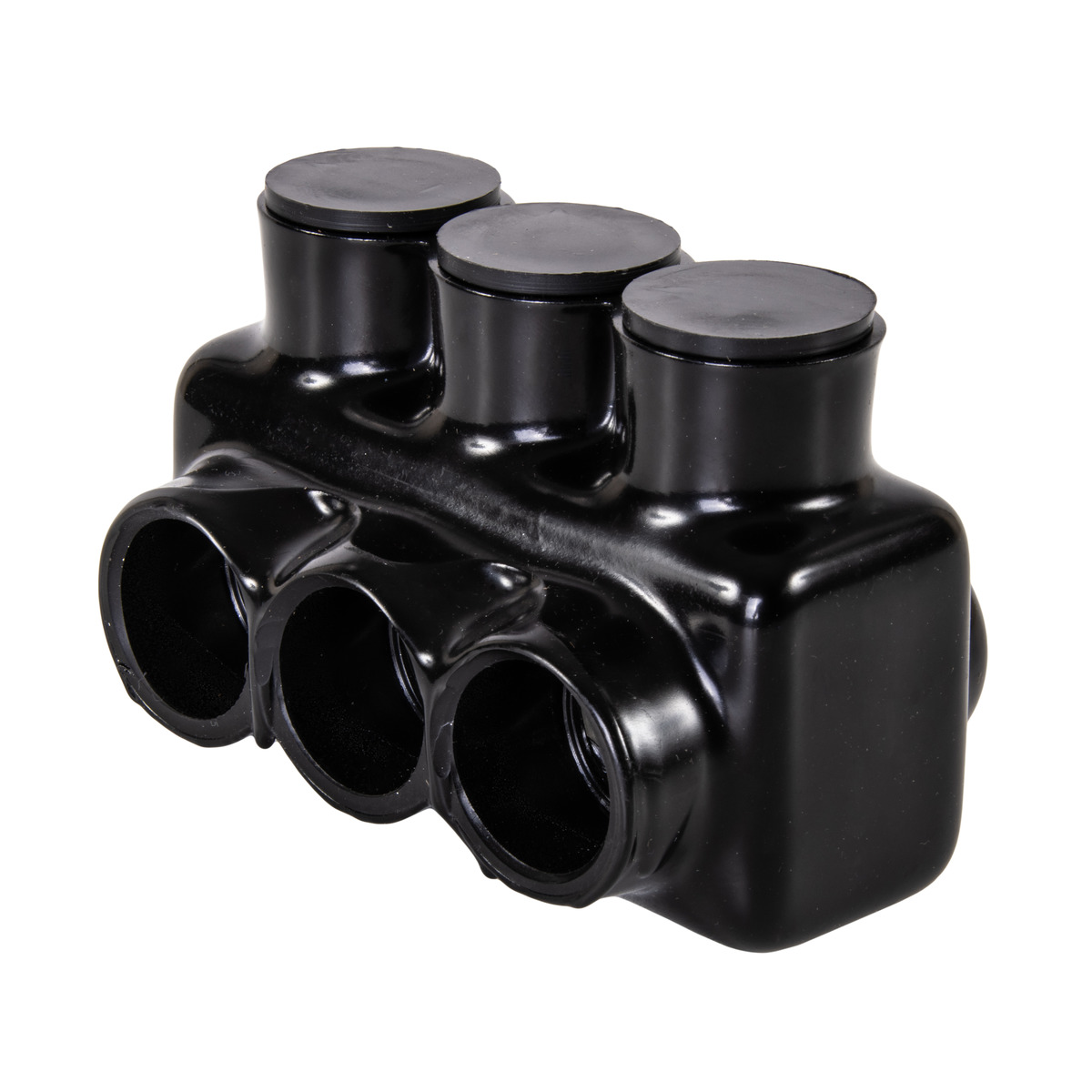
The field problem
Larger motor-lead junctions need a connection method that fits the actual conductor count, conductor size, enclosure, and service environment. Wire nuts are not BEA's preferred standard for these larger connections, while split bolts add a separate field-insulation process.
A Polaris connector combines the mechanical termination and insulated body in one selected assembly. Prepared conductors are inserted and the covered pressure screws are tightened to the manufacturer's specified torque.
Why the standard matters
Less field insulation work
Pre-insulated connectors avoid the multi-layer tape build-up normally required to insulate an exposed split-bolt connection after termination.
Repeatable torque process
Technicians can follow the installation instructions and apply the specified torque, making the termination process easier to standardize and inspect.
Better fit for multiple leads
Polaris models are available with multiple ports. The selected model must be verified for the required conductor count and sizes rather than assuming a split bolt is listed for a multi-conductor junction.
Cleaner service access
A contained connector body keeps the junction organized for inspection, troubleshooting, motor replacement, and future maintenance.
Why split bolts are a poor fit for this motor practice
Listing and conductor count
BEA does not assume a split bolt can accept more conductors than its listing permits. Many motor-lead junctions require a configuration beyond a simple two-conductor splice, so the exact listed use has to be checked.
Taping labor
The completed connection needs careful insulation build-up, finish wrapping, and inspection. That adds time and depends heavily on field workmanship.
Vibration exposure
Motors and nearby industrial equipment can transmit vibration. If tape is not built up and protected adequately, movement can abrade the insulation over time.
Designer and installer checks
- Choose the connector from actual conductor size, type, class, and count—not motor horsepower alone.
- Confirm the selected model's listing and suitability for the enclosure and dry, wet, or exposed environment.
- Check available junction-box space, bend radius, and future maintenance access.
- Use the manufacturer's strip length, port-plug, and torque instructions.
- Account for vibration and inspect the completed connection before energizing equipment.
How can BEA help?
BEA can help review motor connection standards, identify the appropriate Polaris connector configuration, and coordinate conductor, enclosure, environmental, vibration, and maintenance requirements for the application.
Manufacturer source: NSI Polaris connector solutions and NSI guidance on pre-insulated connectors.
Blue Ribbon wastewater instrumentation from BEA
Durable level measurement for demanding wastewater service
Blue Ribbon Corp points to more than four decades in wastewater management and positions its BC001 Birdcage as a long-service instrument for challenging environments. BEA is a Blue Ribbon distributor and can support product selection and application planning.
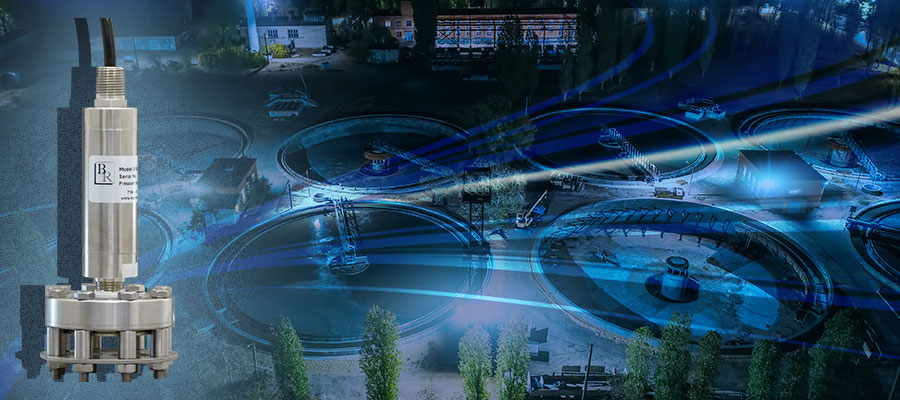
What stands out
Wastewater focus
Blue Ribbon presents the BC001 Birdcage as its flagship solution for wastewater management and cites long experience serving these applications.
Lifecycle perspective
The manufacturer frames product value around longevity, reduced replacement frequency, and less downtime rather than initial purchase price alone.
Surge-protection option
Blue Ribbon identifies the BCP3000 Birdcage Series surge protector as the companion option for addressing lightning-related damage and ties it to enhanced warranty coverage.
What this means for plant teams
Plan for the full measurement point
Instrument choice, mounting, wiring, control integration, environmental exposure, and surge protection should be considered together.
Compare lifecycle cost
Review expected service demands, access costs, downtime exposure, spares, and replacement labor alongside acquisition cost.
Validate the application
Confirm process conditions and required performance with current manufacturer documentation before final selection.
Selection and implementation checks
Define the duty
Document the level range, process media, mounting location, access limitations, environmental conditions, and required control response.
Review electrical protection
Evaluate grounding, wiring routes, panel protection, and whether the BCP3000 option belongs in the overall lightning and surge strategy.
Confirm current terms
Verify product configuration, compatibility, warranty conditions, and installation requirements against current Blue Ribbon documentation.
How can BEA help?
BEA distributes Blue Ribbon products and can help wastewater operators, engineers, and system integrators review the BC001 Birdcage and related protection options for a specific measurement point. Our role is to connect product information with the real installation constraints that drive a supportable selection.
Turck product news
Keep the analog sensor. Add an IO-Link path.
Turck's ILC Analog to IO-Link Inline Converter gives facilities a compact retrofit option when an existing analog sensor remains suitable but the controls strategy calls for IO-Link connectivity.
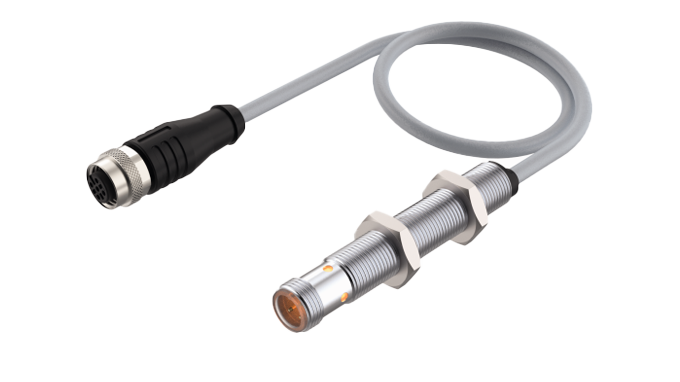
What Turck's converter adds
Analog input flexibility
Turck lists adjustable current inputs of 0-20 mA and 4-20 mA, plus voltage ranges of 0-5 V, 1-6 V, and 0-10 V.
Inline installation
The cylindrical M12-format device connects directly to an analog sensor through its 300 mm lead and provides an M12 IO-Link connection toward the master.
Parameterization options
The converter is parameterizable through IO-Link, including use with Turck Automation Suite. Turck also identifies optional timer delays and switching-output functions for alarm or trip-amplifier use.
Operational implications
Phased upgrades
A converter can support staged modernization when wholesale sensor replacement is unnecessary or impractical.
Configuration consistency
IO-Link parameterization can bring the converted point into the same engineering workflow as other IO-Link devices.
Application review remains essential
Signal range, wiring, environmental conditions, power budget, IO-Link master behavior, and required control response must be checked before selection.
Designer and implementation checks
Confirm the signal
Match the sensor's current or voltage output to a supported input range and confirm the required scaling in the control system.
Check the physical interface
Review M12 pinout, cable length, mounting space, strain relief, ingress protection, and the ambient-temperature range for the installation.
Plan commissioning
Confirm the master's IO-Link port configuration, IODD handling, process-data mapping, diagnostics, and any switching or timing behavior before production release.
How can BEA help?
BEA can help evaluate whether the Turck ILC is a good fit for an existing analog sensing point, review the connection to the selected IO-Link master, and support parameterization and commissioning planning. Final selection should be based on the sensor signal, electrical design, environmental requirements, and machine or process risk.
Read Turck's product announcement | Review the official product details
Industrial reliability and municipal controls
Surge Protection: Why Industrial and Municipal Facilities Cannot Afford to Ignore It
Modern plants, pump stations, lift stations, well houses, and utility systems depend on electronics that are productive, diagnostic-rich, and vulnerable to short electrical disturbances. A transient event that lasts only a fraction of a second can damage a PLC, corrupt communications, trip a drive, or leave a field device weakened enough to fail later.
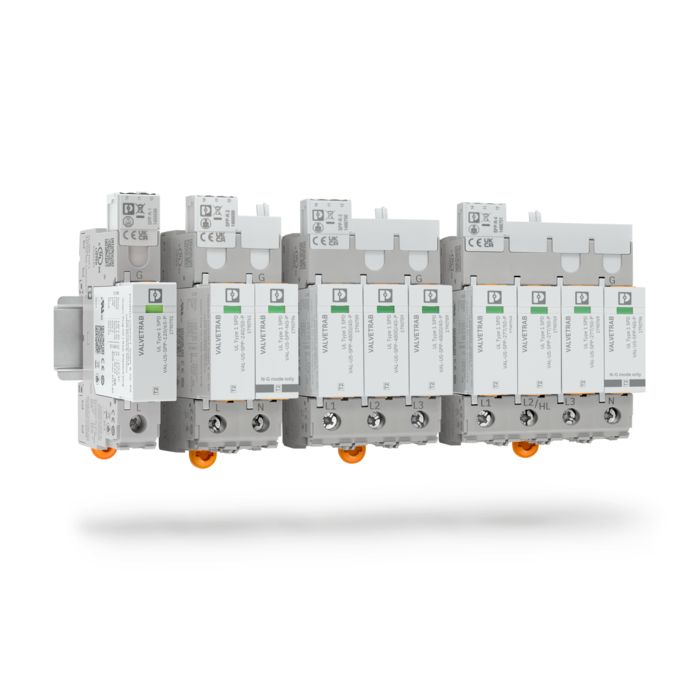
Illustration: how a surge protector works
When voltage rises suddenly, the surge protective device provides a preferred path for transient energy. It clamps the overvoltage and diverts surge current toward the grounding and bonding system, helping keep the remaining voltage at the protected equipment within a safer range for the application.
Normal operation
The SPD remains inactive while system voltage is within its intended operating range.
During the transient
The SPD conducts surge current and limits the voltage passed downstream. The exact protection depends on device selection and installation.
After the event
Status indicators, alarm contacts, or replaceable modules should be checked so the site is not left unknowingly unprotected.
What a surge is
An electrical surge, or transient overvoltage, is a brief voltage increase above the normal operating level. A surge protective device limits that transient energy by diverting or restricting surge current before it reaches vulnerable electronics.
Where it comes from
Lightning is only one source. Utility switching, motor starts and stops, contactors, solenoids, VFDs, capacitor banks, generator transfers, faults, and long outdoor conductors can all place surge energy into a facility.
Why it matters
Industrial and municipal systems combine sensitive controls, inductive loads, long cable runs, outdoor equipment, and remote structures. That mix gives transient voltage many possible entry paths.
Protecting only the main feed is not enough
A surge can enter through any connected conductor. Main power protection may reduce one exposure, but it does not automatically protect a level transmitter, Ethernet cable, telephone circuit, radio coax, buried instrumentation line, or remote I/O connection.
Municipal sites
- Lift stations and well houses
- Pump control panels and VFDs
- Flow, pressure, and level transmitters
- Cellular, licensed radio, and antenna systems
Industrial sites
- PLC and HMI cabinets
- Machine panels and MCCs
- Ethernet and serial communication networks
- Remote instruments and interbuilding wiring
Surge damage is not always immediate
Some events create obvious failures: a power supply stops, a PLC fails, or a drive refuses to restart. Other events weaken components and create problems that are harder to connect to the original disturbance.
Control symptoms
Intermittent PLC faults, unexpected HMI or computer reboots, failed I/O channels, and repeated power-supply failures can all follow transient exposure.
Signal symptoms
Drifting analog readings, unstable instrument signals, damaged Ethernet ports, radio failures, and unexplained communication losses can consume troubleshooting time long after the event.
Process risk
For water, wastewater, utility, and production systems, the cost is not limited to replacement hardware. Downtime, emergency service, data loss, regulatory impact, or process interruption may be the larger concern.
A UPS is not a complete surge-protection system
A UPS is useful for ride-through power and controlled shutdown. It should not be treated as a substitute for properly selected surge protective devices, grounding, bonding, circuit protection, and electrical-system design.
A layered approach is normally required
1. Service and distribution
Protection near the incoming service or primary distribution equipment helps reduce larger transient events entering from the utility or facility distribution system.
2. Branch and control panels
Additional devices at distribution panels, MCCs, pump panels, machine panels, and automation cabinets place protection closer to PLCs, drives, HMIs, power supplies, and network equipment.
3. DC power and signals
Low-voltage circuits may need separate protection for 24 VDC power, analog loops, digital I/O, RTDs, thermocouples, Ethernet, serial communication, telephone lines, and radio coax.
4. Remote equipment
Long outdoor runs and cables between structures often deserve attention at both ends so field devices and panels are not left exposed from the remote side.
Panel and MCC placement: where surge protection is commonly applied
The most useful illustration for a plant or municipal site is not a generic building. It is the electrical path: incoming service protection to reduce larger utility-side events, MCC or distribution protection close to motor-control equipment, and branch or control-panel protection near PLCs, drives, power supplies, and communications.
Incoming service or switchgear
First layer for larger transients entering from utility switching, restoration, faults, or nearby lightning induction.
Main MCC or distribution panel
A second layer close to motor starters, VFD feeders, pump loads, and distribution equipment helps reduce residual transient voltage.
PLC, VFD, and branch panels
Protection near the control load is commonly paired with separate devices for 24 VDC, analog, Ethernet, serial, or radio/coax circuits.
Grounding, bonding, and installation details decide effectiveness
An SPD needs a low-impedance path to divert transient energy. Long leads, poor bonding, corroded connections, separated grounding systems, or poor routing can reduce performance even when the device itself is appropriate.
- Keep SPD conductors short and direct.
- Bond control-panel enclosures correctly.
- Verify grounding-electrode connections and interbuilding bonding.
- Address shield grounding and cable routing.
- Separate sensitive wiring from high-energy conductors where practical.
Inspection should be part of maintenance
Surge protective devices can absorb or divert repeated transient events over time. Many industrial devices include visual status indication, replaceable modules, remote alarm contacts, end-of-life indication, or monitoring points that can be wired into PLC or SCADA systems.
That status is especially useful at unmanned lift stations, well houses, and remote telemetry sites. Operators should know when a module needs inspection or replacement instead of assuming the site remains protected after storms or utility disturbances.
Selection factors
- System voltage and phase configuration
- Grounding configuration and installation location
- Short-circuit current rating and available fault current
- Maximum continuous operating voltage and voltage protection rating
- Signal type, communication speed, and environment
- Remote monitoring needs and upstream/downstream coordination
Standards and product evaluation
UL 1449 is the primary North American product safety standard associated with low-voltage SPDs. A listed or evaluated device still has to be selected and installed for the actual electrical system, signal type, environment, and maintenance expectation.
UL Solutions surge protection device testing and certification
How BEA can help
Britton Electronics & Automation can evaluate surge-protection needs during a new control-system design, panel replacement, facility upgrade, or preventative-maintenance inspection. BEA can help identify surge-entry paths across electrical services, PLC cabinets, VFD panels, water and wastewater sites, remote telemetry, instrumentation, Ethernet networks, radio systems, outdoor wiring, and existing grounding and bonding systems.
BEA can also incorporate surge-device status contacts into PLC or SCADA systems so operators receive an alarm when protection needs attention. Surge protection cannot prevent every electrical failure, but a properly designed and maintained system can reduce avoidable damage, unexplained control problems, and costly downtime.
Phoenix Contact surge protection for North American supply systems
Control panel power supply selection
A 24 VDC supply is more than voltage and amperage
A calculated 7 amp panel load can make a 10 amp, 24 VDC supply look like an easy selection. Under steady operation, that may be true. The real question is how the supply behaves when devices start together, a capacitive load energizes, incoming power sags, or one branch circuit faults.
Phoenix Contact offers UNO POWER, TRIO POWER, and QUINT POWER families for different application needs. Selecting between them should be an engineering decision based on load behavior, system availability, diagnostics, fault clearing, and future serviceability.
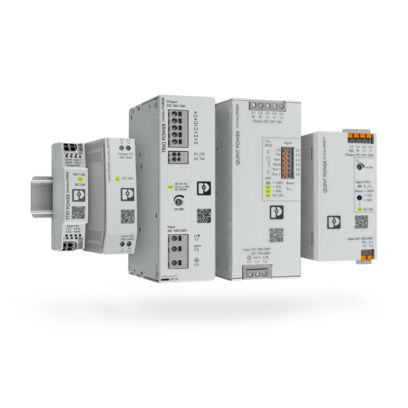
The problem with nameplate-only selection
Voltage and continuous current are necessary checks, but they do not describe startup reserve, overload behavior, short-circuit response, monitoring, or how one failed field circuit affects the rest of the panel. A supply that is acceptable for a small steady load may be a poor fit for a pump station, process panel, or remote system where losing the 24 VDC bus creates downtime and confusing fault symptoms.
UNO POWER
Compact basic power for stable, predictable loads. UNO can fit small enclosures and dedicated auxiliary equipment where advanced monitoring or selective fault clearing is not required.
- Small instrumentation panels
- Remote monitoring enclosures
- Operator interfaces or communication devices
- Constant, noncritical DC loads
TRIO POWER
Standard industrial power for machine and system loads with more dynamic behavior. TRIO can be appropriate where reserve capability, diagnostics, and cost balance matter.
- Machine control panels
- Conveyor and solenoid systems
- Distributed I/O panels
- Moderate startup demand
QUINT POWER
Maximum-functionality power for critical applications where reserve, diagnostics, configurable behavior, and fault-clearing support can protect system availability.
- Municipal water and wastewater systems
- Lift and pump stations
- Remote unattended panels
- Processes where restarting is difficult
Why fault current matters
Consider a panel with separate DC branches for the PLC, remote I/O, operator interface, network switch, instrumentation, relays, solenoids, and field devices. If one field cable shorts, the preferred result is for the protective device on that branch to trip quickly while the unaffected control circuits remain powered.
A current-limiting supply may reduce output before a standard miniature circuit breaker receives enough current to trip magnetically. The faulted branch then drags down the whole 24 VDC bus while protection responds slowly or the control system resets first.
Selective Fuse Breaking is a system design tool
Phoenix Contact describes QUINT POWER supplies with SFB Technology as supporting selective tripping of standard miniature circuit breakers so parallel loads can continue operating. The actual result still depends on the exact supply, breaker curve and rating, conductor size, wire length, connection resistance, and available short-circuit current.
When QUINT is worth specifying
One fault should not stop everything
In a coordinated design, a QUINT supply can help provide the short-duration current needed to clear a faulted branch while preserving power to PLCs, communications, and unaffected loads.
Temporary load demand matters
Some industrial computers, HMIs, network equipment, capacitive devices, solenoid banks, radios, and I/O assemblies demand more current during startup than during normal operation. Power reserve can support these events without simply oversizing continuous capacity.
Monitoring provides earlier warnings
More advanced supplies can provide status and signaling that help identify output voltage, current, reserve, or overload concerns before the DC bus fails and the root cause becomes harder to separate from the shutdown.
Future changes are likely
Panels often gain instruments, radios, Ethernet switches, I/O modules, relays, and monitoring equipment over time. A supply with useful reserve and diagnostics gives the system a better foundation for those additions.
When TRIO or UNO may be the better choice
TRIO may fit
TRIO POWER can be the right balance when the application has dynamic loads but limited consequences from a complete shutdown, moderate boost capability is enough, extensive preventive monitoring is unnecessary, and panel cost is a major constraint.
UNO may fit
UNO POWER can be the correct selection when the load is small and predictable, little starting current is required, DIN rail space is tight, the supply serves a dedicated device, and branch-circuit selectivity is not required.
Good engineering does not mean using the most expensive supply in every enclosure. It means matching the operating behavior of the power supply to the risk, load profile, and service expectations of the control system.
Questions to ask before selecting
- What is the normal continuous load?
- What is the maximum expected load?
- Are connected devices highly capacitive?
- Do loads have significant startup or inrush current?
- How much future expansion is expected?
- What happens if the 24 VDC bus shuts down?
- Must one failed branch be isolated while other circuits continue operating?
- What type and size of branch protection will be used?
- Are wire lengths and conductor sizes compatible with selective tripping?
- Does the PLC need advance warning of an overloaded power system?
- Is redundancy required?
- How difficult or expensive would restart be?
How can BEA help?
Britton Electronics & Automation can help evaluate control-panel power calculations, Phoenix Contact UNO, TRIO, and QUINT selection, DC branch-circuit coordination, breaker or electronic protection selection, voltage drop, redundancy, PLC monitoring, modernization, and recurring 24 VDC failures.
The right supply is not selected only for the day everything works normally. It is selected for how the panel should behave when a field circuit fails, a load starts hard, or the system grows beyond its original assumptions.
For additional manufacturer context, see Phoenix Contact's overview of power supplies, SFB Technology, and QUINT POWER maximum-functionality supplies.
Power factor is a capacity and efficiency signal
In an AC power system, some current does useful work and some current supports magnetic fields in equipment such as induction motors, transformers, and contactor coils. Power factor describes how much of the supplied apparent power is converted into real work at a given operating point.
A low power factor does not mean the motor is doing more mechanical work. It usually means the electrical system is carrying more current than necessary for the useful output being delivered.

What is power factor?
Power factor is the ratio between real power, measured in kilowatts (kW), and apparent power, measured in kilovolt-amperes (kVA). Reactive power, measured in kVAR, is the portion that circulates between the source and reactive loads without producing mechanical output.

The power triangle
The triangle is a useful way to explain the relationship: kW is useful work, kVAR is reactive demand, and kVA is the total electrical capacity the distribution system must support.

Lagging current
Many inductive loads draw current that lags voltage. The larger that phase difference becomes, the lower the displacement power factor becomes.
Why does power factor matter?
Good power factor
- Lower current for the same useful work
- Less heating in feeders, transformers, and switchgear
- Lower voltage drop under load
- More usable electrical capacity for production equipment
Poor power factor
- Higher current for the same useful work
- More I-squared-R losses and equipment heating
- Greater voltage drop during heavy loading
- Less available capacity before conductors or transformers reach limits
Utilities may also measure demand in ways that penalize poor power factor. Even when there is no direct penalty, low power factor can still consume distribution capacity that could otherwise support additional loads.
Capacitor banks
Capacitor banks are a common correction method for inductive loads. When applied correctly, they supply part of the reactive power locally, so less reactive current has to travel from the utility source through upstream conductors and transformers.
Before correction
The utility and upstream distribution equipment supply both real current and reactive current to the load. Feeders and transformers carry the combined current, which can increase heating and voltage drop.

After correction
A properly engineered capacitor bank near the load supplies reactive power locally. The motor mechanical load is unchanged, but upstream current can be reduced.
Do not confuse displacement power factor with harmonics
A facility with variable frequency drives may show good displacement power factor while still having harmonic distortion on the input current. That is why a power-quality review should look beyond a single power factor number when drives, rectifiers, or other nonlinear loads are present.
When to investigate power factor
- Utility bills show power factor penalties, kVA demand charges, or unexplained demand increases.
- Transformers, feeders, or switchgear are warm under normal production loading.
- Voltage drop appears when large motors, pumps, or blowers start or operate together.
- A facility is adding equipment and needs to understand available electrical capacity.
- Existing capacitor banks, contactors, or controllers are aging, disabled, or frequently faulting.
How BEA can help
BEA can help evaluate the practical side of power factor in industrial automation environments: reviewing electrical drawings, checking motor and drive applications, coordinating with qualified electrical personnel, and supporting power-quality measurements where appropriate. The right answer may be correction equipment, a settings or maintenance issue, a drive or harmonic review, or simply better visibility into how the electrical system behaves under real production load.
For facilities with motor-control centers, VFDs, pumps, blowers, and mixed automation loads, the best starting point is a measured assessment. That keeps recommendations tied to actual current, voltage, demand, and operating conditions instead of assumptions.
Selected illustration sources are public Wikimedia Commons files used as attributable technical image candidates; final image approval and licensing review should occur before publishing.