
Sensor Selection: Picking the Right Tool for the Harsh Environment
Sensor selection often looks simple on paper. Define the range, output, supply voltage, and accuracy, then find a device that checks those boxes. That may identify a sensor capable of measuring the process, but it does not prove that the sensor is right for the application.
A device that works during commissioning can become unreliable after months of condensation, foam, buildup, vibration, sunlight, freezing weather, chemical vapors, or high-pressure washdown. The measurement requirement is only part of the specification. The environment is part of the specification too.
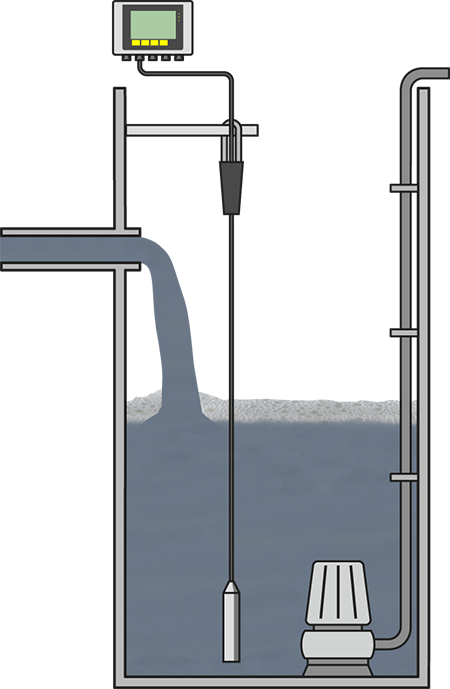
Start with the process, not the sensor
Before comparing devices, BEA defines what the measurement must accomplish. Is the signal used for indication, alarming, control, batching, inventory, or shutdown? How quickly does the process change? What happens if the reading is briefly wrong? What happens if it disappears completely?
Those questions establish the level of accuracy, response, diagnostics, and redundancy that the application actually needs. They can also reveal that continuous measurement is unnecessary. In some duties, a carefully applied discrete switch is simpler and more dependable than a continuous transmitter.
Measurement purpose
Define the process variable, usable range, required response, and how the PLC or operator will use the signal.
Consequence of error
Distinguish a minor indication problem from a condition that can overflow a tank, damage equipment, interrupt production, or create a safety concern.
Useful performance
Match accuracy and resolution to the process. Repeatability, survivability, and maintainability often matter more than laboratory-level precision.
The environment changes everything
Environmental conditions are not secondary details. They determine construction materials, enclosure and connection methods, mounting, protective measures, and the maintenance plan.
Moisture and condensation
Moisture can travel through connectors, junction boxes, conduit, vents, and damaged cable jackets. Temperature cycling may create condensation inside equipment that appears sealed. Enclosure rating, cable entry, orientation, drainage, and connector selection all matter.
Chemical exposure and corrosion
Wastewater gases, chlorine environments, cleaning compounds, process vapors, and treatment chemicals can attack housings, seals, diaphragms, cables, connectors, and mounting hardware. Compatibility must cover every exposed component, not only the sensing element.
Temperature
Ambient and process temperature are separate limits. Steam, nearby equipment, direct sunlight, rapid cycling, and winter conditions can affect electronics and measurement behavior even when the nominal process temperature looks acceptable.
Vibration and mechanical stress
Pumps, piping, conveyors, machinery, tanks, and flexible structures can transmit vibration that never appears in the process specification. Rigid mounting, cable support, strain relief, and connector retention may be as important as the sensing technology.
Washdown and contamination
Hot water, pressure, detergent, sanitizer, product buildup, and repeated thermal cycling can expose weaknesses beyond a basic IP or NEMA rating. Housing shape, crevices, cable routing, mounting surfaces, and cleaning practice require review.
Accessibility and maintenance
A device that needs periodic cleaning or adjustment should not require scaffolding, confined-space entry, a shutdown, or major disassembly for every service visit. Maintainability is part of selection.
Ultrasonic or radar for level measurement?
Ultrasonic and radar are both strong non-contact level technologies. Neither is universally better. The right choice follows the material, vessel, atmosphere, mounting options, reliability target, and expected maintenance.
Ultrasonic
Ultrasonic measurement can be economical, straightforward to install, and effective in many clean or moderately difficult applications.
- Check for foam, heavy condensation, steam, turbulence, and acoustic interference.
- Review narrow vessels, obstructions, and poor mounting geometry.
- Consider changes in the air space and temperature along the sound path.
Radar
Radar is less dependent on air conditions and can perform well around vapor, temperature changes, and difficult atmospheres found in wastewater and chemical service.
- Select the antenna and frequency characteristics for the application.
- Review internal structures, false reflections, and mounting geometry.
- Account for buildup and, where relevant, materials with very low dielectric properties.
Wastewater is hard on instrumentation
Wet wells, lift stations, chemical tanks, sludge tanks, open channels, water towers, and treatment basins combine conditions that challenge sensors and wiring. Humidity, corrosive gases, foam, grease, solids, turbulence, ragging, insects, debris, flooding, and difficult access may all occur at the same site.
Outdoor stations add heat, cold, lightning, and electrical disturbances. A clean wet well during commissioning is not representative of that wet well several years later. Equipment should be selected with the expectation that the environment will eventually be less clean, less accessible, and less predictable than it was on startup day.
Washdown applications test the complete installation
Food processing and similar production areas can destroy equipment that otherwise appears suitable. The installation may see hot water, pressure, caustic cleaners, detergents, sanitizer, and rapid thermal cycling several times each week or even each shift.
A stainless steel sensor is not a complete washdown solution by itself. The connector, cable gland, junction box, cable jacket, mounting surface, and cable route must also tolerate the cleaning method and chemicals. Hygienic design and material compatibility should be evaluated across the whole installation.
Mounting can matter more than the datasheet
Many apparent sensor failures begin as installation problems. A good sensor in a bad location is still a bad measurement.
Level
An ultrasonic sensor can see tank walls or an agitator. Radar can be mounted above an internal obstruction. Both cases can produce false or unstable returns.
Pressure and flow
A pressure transmitter may trap air or sediment. A flowmeter may lack the pipe conditions its measurement principle requires. Process taps and orientation affect the result.
Temperature and presence
A temperature sensor can measure ambient conditions instead of the process. A photoelectric sensor can face changing sunlight. A proximity sensor can become buried under product buildup.
Mechanical details
Unsupported cable, poor strain relief, and vibration at a connector can cause intermittent faults that look like electronic failures.
BEA considers geometry, access, wiring, obstructions, and maintenance during selection, not after the sensor has already been purchased.
Electrical and controls compatibility
The sensing principle is only one part of the system. The output and power requirements must fit the available control platform, distance, environment, and support plan. Common choices include 4-20 mA, 0-10 V, discrete or pulse outputs, IO-Link, HART, and industrial network interfaces.
The review should cover available PLC input types, resolution, isolation, shielding, grounding, cable length, power supply capacity, and surge protection. A mismatched interface can add converters, special modules, programming, and spare-parts burden. Where the application allows it, a simpler interface can improve long-term supportability.
Accuracy is not the only number that matters
Accuracy deserves attention, but it does not describe how a device will behave in the complete installation. Compare the specifications that can affect real performance and service life.
Measurement behavior
Repeatability, resolution, response time, long-term drift, minimum sensing distance, dead band, and beam angle.
Process survival
Operating temperature, pressure rating, wetted-material compatibility, enclosure rating, and shock and vibration limits.
Electrical fit
Supply range, electrical loading, output behavior, cable requirements, connector system, grounding, and diagnostics.
The most accurate sensor on paper can perform worse than a slightly less accurate device that is better suited to the environment and mounting conditions.
Failure mode matters
Selection should include a plan for bad data and complete failure. Does the signal fail high or low? Can the PLC distinguish an instrument fault from a valid process condition? Is a diagnostic output available? Can an alarm detect a frozen or stale reading? Will an operator recognize an unrealistic value?
Where the consequence justifies it, continuous tank level may be backed up by an independent high-high or low-low switch. The backup should be selected and tested as its own protection layer. Reliability comes from the complete measurement strategy, not only the primary sensor.
Standardization versus application fit
Standardization has real value: common spares, familiar programming, fewer configuration tools, easier troubleshooting, reduced inventory, and more consistent training. A preferred family is a sensible starting point.
It should not become an absolute rule. If chemistry, temperature, geometry, response, diagnostics, or maintainability make the preferred device a poor fit, the application provides a sound reason to deviate. Standardize where it makes sense. Deviate when the application gives you a good reason.
Supportability is part of the design
A device may stay in service for five or ten years. Manufacturer stability, availability, replacement lead time, distribution, documentation, spare strategy, configuration software, and replacement compatibility all affect lifecycle cost.
BEA also considers whether replacement or recommissioning can reasonably be handled by plant personnel. Instrumentation that depends on unusual proprietary hardware, undocumented settings, or scarce expertise can create avoidable risk long after installation.
Five questions before we specify a sensor
What exactly are we trying to measure?
Define the process requirement and how the signal will be used before selecting a technology.
What will the sensor actually be exposed to?
Include moisture, temperature, chemicals, vibration, washdown, foam, buildup, contamination, and abnormal events.
Where can it be mounted correctly?
Confirm geometry, access, obstructions, wiring, mechanical support, and serviceability.
How will it fail?
Decide how the PLC and operator will recognize bad, missing, frozen, or implausible data.
Can we support it ten years from now?
Consider spares, software, documentation, replacement availability, training, and maintainability.
A practical BEA selection process
Understand
Define the process, measurement purpose, range, accuracy need, response, failure consequence, and operating conditions.
Inspect
Study the real mounting location, contamination, wiring, temperature, access, geometry, and maintenance practices.
Select
Choose the technology, materials, interface, enclosure, mounting method, and protective measures for the application.
Validate
Commission under actual conditions, verify scaling and alarms, document configuration, and confirm that maintenance personnel can support it.
Reliability starts before installation
A sensor that fails repeatedly is not always a bad product. It may be the wrong technology, material, location, interface, or installation method for that environment.
BEA evaluates the process, environment, control system, mounting, maintenance requirements, failure consequences, and equipment lifecycle together. The goal is not merely to make the measurement work during startup. The goal is to install a measurement system that operators can trust after years of real-world service.
How Can BEA Help?
Britton Electronics & Automation works with industrial and municipal customers to select, install, integrate, troubleshoot, and replace instrumentation used in demanding environments.
We review the process, installation conditions, control system, wiring, mounting, maintainability, and lifecycle requirements before selecting equipment. If a measurement has become unreliable, or if you are designing a new system, we can help determine whether the problem is the sensor, the application, the installation, or a combination of all three.
Application-specific engineering, manufacturer instructions, and applicable codes should be reviewed before final equipment selection and installation.