
BEA motor-connection practice
Why BEA standardizes on Polaris connectors for motor leads over 2 hp
A pre-insulated, torque-applied connector gives our field teams a cleaner and more repeatable alternative to wire nuts and field-taped split bolts on larger motor connections.
The field problem
Larger motor-lead junctions need a connection method that fits the actual conductor count, conductor size, enclosure, and service environment. Wire nuts are not BEA's preferred standard for these larger connections, while split bolts add a separate field-insulation process.
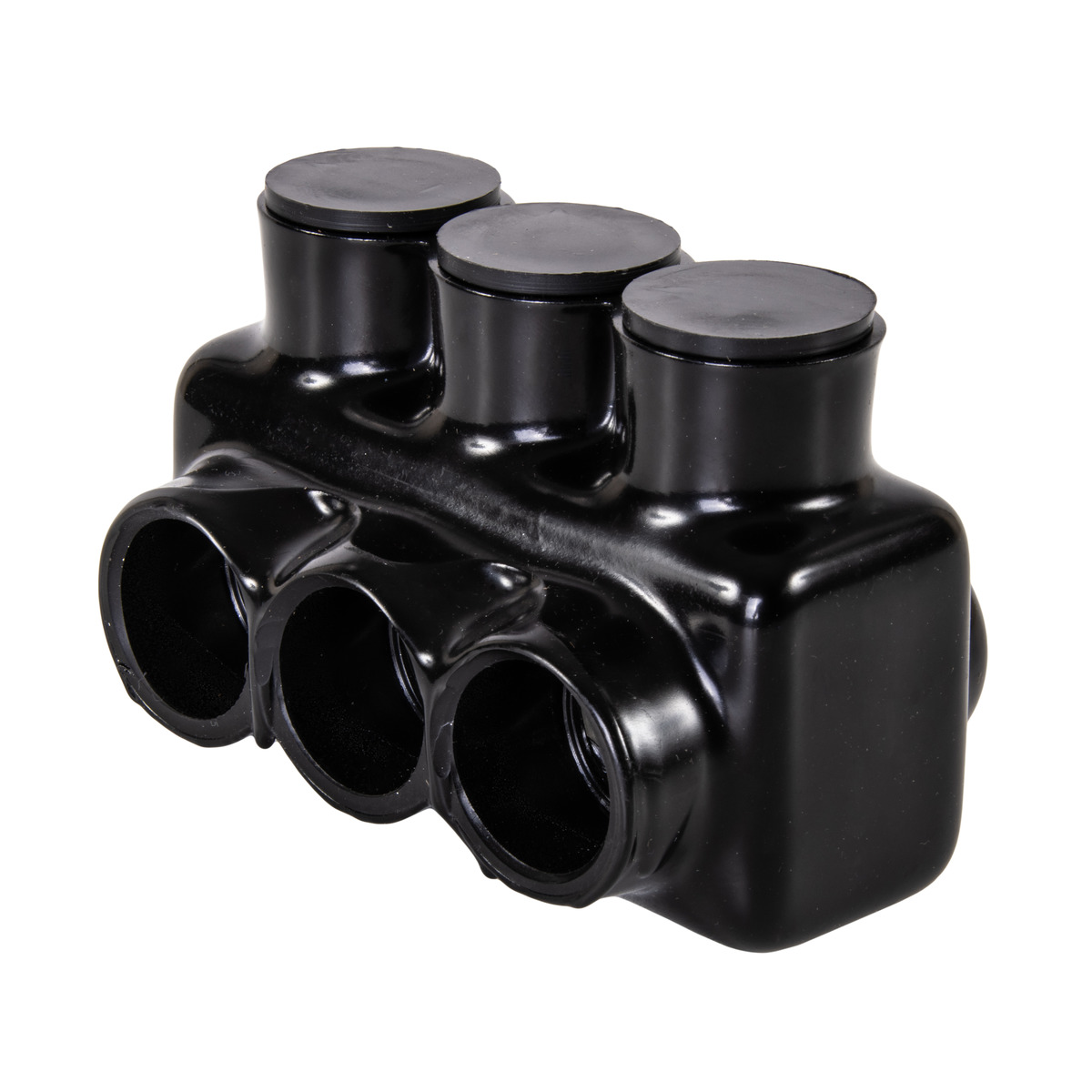
A Polaris connector combines the mechanical termination and insulated body in one selected assembly. Prepared conductors are inserted and the covered pressure screws are tightened to the manufacturer's specified torque.
Why the standard matters
Less field insulation work
Pre-insulated connectors avoid the multi-layer tape build-up normally required to insulate an exposed split-bolt connection after termination.
Repeatable torque process
Technicians can follow the installation instructions and apply the specified torque, making the termination process easier to standardize and inspect.
Better fit for multiple leads
Polaris models are available with multiple ports. The selected model must be verified for the required conductor count and sizes rather than assuming a split bolt is listed for a multi-conductor junction.
Cleaner service access
A contained connector body keeps the junction organized for inspection, troubleshooting, motor replacement, and future maintenance.
Why split bolts are a poor fit for this motor practice
Listing and conductor count
BEA does not assume a split bolt can accept more conductors than its listing permits. Many motor-lead junctions require a configuration beyond a simple two-conductor splice, so the exact listed use has to be checked.
Taping labor
The completed connection needs careful insulation build-up, finish wrapping, and inspection. That adds time and depends heavily on field workmanship.
Vibration exposure
Motors and nearby industrial equipment can transmit vibration. If tape is not built up and protected adequately, movement can abrade the insulation over time.
Designer and installer checks
- Choose the connector from actual conductor size, type, class, and count—not motor horsepower alone.
- Confirm the selected model's listing and suitability for the enclosure and dry, wet, or exposed environment.
- Check available junction-box space, bend radius, and future maintenance access.
- Use the manufacturer's strip length, port-plug, and torque instructions.
- Account for vibration and inspect the completed connection before energizing equipment.
How can BEA help?
BEA can help review motor connection standards, identify the appropriate Polaris connector configuration, and coordinate conductor, enclosure, environmental, vibration, and maintenance requirements for the application.
Manufacturer source: NSI Polaris connector solutions and NSI guidance on pre-insulated connectors.