
Turck product news
Keep the analog sensor. Add an IO-Link path.
Turck's ILC Analog to IO-Link Inline Converter gives facilities a compact retrofit option when an existing analog sensor remains suitable but the controls strategy calls for IO-Link connectivity.
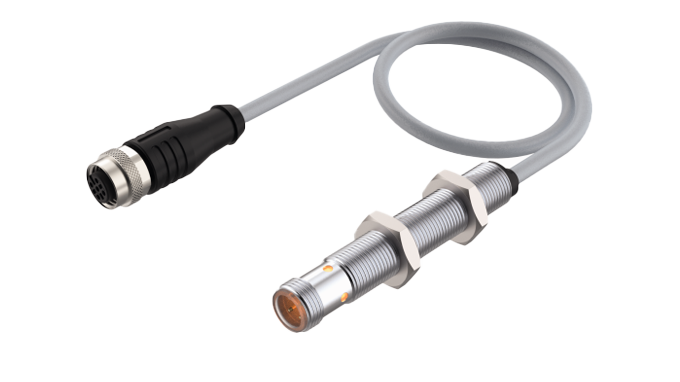
What Turck's converter adds
Analog input flexibility
Turck lists adjustable current inputs of 0-20 mA and 4-20 mA, plus voltage ranges of 0-5 V, 1-6 V, and 0-10 V.
Inline installation
The cylindrical M12-format device connects directly to an analog sensor through its 300 mm lead and provides an M12 IO-Link connection toward the master.
Parameterization options
The converter is parameterizable through IO-Link, including use with Turck Automation Suite. Turck also identifies optional timer delays and switching-output functions for alarm or trip-amplifier use.
Operational implications
Phased upgrades
A converter can support staged modernization when wholesale sensor replacement is unnecessary or impractical.
Configuration consistency
IO-Link parameterization can bring the converted point into the same engineering workflow as other IO-Link devices.
Application review remains essential
Signal range, wiring, environmental conditions, power budget, IO-Link master behavior, and required control response must be checked before selection.
Designer and implementation checks
Confirm the signal
Match the sensor's current or voltage output to a supported input range and confirm the required scaling in the control system.
Check the physical interface
Review M12 pinout, cable length, mounting space, strain relief, ingress protection, and the ambient-temperature range for the installation.
Plan commissioning
Confirm the master's IO-Link port configuration, IODD handling, process-data mapping, diagnostics, and any switching or timing behavior before production release.
How can BEA help?
BEA can help evaluate whether the Turck ILC is a good fit for an existing analog sensing point, review the connection to the selected IO-Link master, and support parameterization and commissioning planning. Final selection should be based on the sensor signal, electrical design, environmental requirements, and machine or process risk.
Read Turck's product announcement | Review the official product details